
A Story of Clarity, Collaboration, and Measurable Progress

Over the last few years, I’ve had the privilege of being closely involved in the growth and evolution of Summerhill Surgical Centre. It’s a journey I’m deeply proud of, not because it was dramatic or reactive, but because it was thoughtful, deliberate, and rooted in a genuine desire to do better, for patients, for the team, and for the future of the hospital.

Transformation in healthcare doesn’t always begin with a crisis. Often, it begins with a quieter moment of recognition. A sense that while things are working, they could work more clearly, more consistently, and with less strain on the people holding everything together. That was the place Summerhill found itself a few years ago.
A strong foundation, ready for its next chapter
When we first started this journey, Summerhill was already a well-established day hospital with excellent clinical outcomes and a committed, capable team. Like many growing medical organisations, our systems and processes had developed organically over time. Roles evolved as needs changed, processes were shaped by urgency, and ways of working reflected the realities of a busy clinical environment.

Nothing was broken. But we could feel that the organisation was working harder than it needed to.
Rather than seeing this as a problem, we chose to see it as an opportunity. An opportunity to pause, step back, and intentionally strengthen the foundations of the business so that we could continue delivering high-quality care in a way that was sustainable for the team.
Creating space for honest conversations
One of the most important decisions we made was to create space for honest, open conversations across the organisation. These weren’t conversations about blame or performance. They were conversations about reality. How work actually flowed, where things felt unclear, and what made some days harder than they needed to be.
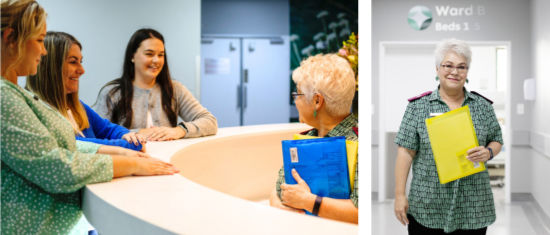
These discussions involved leadership, management, and frontline teams. They required openness and trust, and I’m proud of how the Summerhill team showed up to them. There was a shared understanding that clarity would ultimately benefit everyone, including our patients.
With Kaleidoscope alongside us, we took time to truly understand how the organisation functioned day to day. Through workshops, interviews, and operational reviews, we mapped workflows, communication channels, decision-making structures, and role clarity. This diagnostic phase was not about changing everything at once, but about building a shared understanding of where we were starting from.
That clarity became the anchor for the work that followed.
Designing systems that support people
Once we had a clear picture of our current state, the focus shifted to design. The question was simple: what systems and structures would best support Summerhill’s long-term vision, without losing the heart of what makes this place special?

Together, we focused on:
Clarifying roles and responsibilities
Strengthening operational efficiency
Improving communication across teams
Establishing consistent, reliable processes
Creating clear frameworks for accountability and performance
What mattered to me throughout this phase was that nothing felt imposed. Every change was shaped collaboratively with the people who would be living it day to day. That co-creation made the work practical, relevant, and sustainable.
As alignment improved, we began to feel the difference. Decision-making became clearer. Teams understood how their roles connected to the bigger picture. Processes that once felt heavy started to flow more smoothly. Importantly, our culture wasn’t compromised, it was reinforced.
Seeing progress, and feeling it too
Some of the most meaningful outcomes of this journey weren’t immediately measurable. There was a noticeable shift in confidence, in how decisions were made, and in how teams experienced their work. There was more clarity, less friction, and a stronger sense of shared purpose.
But there were also tangible results.

One of the clearest indicators of progress was staff turnover. Where turnover had previously been around 30%, it reduced to approximately 10% over the course of the transformation. In a healthcare environment, that change is significant. Lower turnover supports continuity of care, strengthens team cohesion, and reduces the operational pressure that constant recruitment brings.
For me, it was a powerful signal that we were building not just better systems, but a healthier organisation.
The value of true partnership
This journey worked because it was a partnership. Our team brought deep knowledge of the hospital, our patients, and our people. Kaleidoscope brought structure, an external perspective, and the ability to guide difficult conversations with care and clarity.
Their role was never to tell us what to do, but to walk alongside us as we built the capability to move forward with confidence. That approach made all the difference.
At one point during the process, someone reflected that once we aligned around what needed to change, progress followed naturally. I believe that’s true. The hardest part was being willing to look honestly at ourselves. Once we did that, everything else became possible.
What this journey offers other day hospitals
I know that many healthcare leaders will recognise this stage of growth. Clinical excellence often leads the way, while operational frameworks quietly lag behind. The moment comes when you realise that to keep delivering exceptional care, the way the organisation works must evolve too.
What I’ve learned from this journey is simple:
Take time to understand before you act
Build alignment before introducing change
Treat culture and systems as inseparable
Invest in foundations, not quick fixes
Transformation doesn’t require starting from scratch. It requires building intentionally on what already exists.
Proud of what we’ve built
Today, Summerhill stands on far stronger foundations. Not because everything is perfect, but because there is clarity. Clear roles, clear processes, clearer decision-making, and a shared confidence in how we move forward together.

When I look at the hospital now, I feel proud of what has been built over the last few years. Proud of the team, proud of the culture, and proud of the fact that we chose to invest in doing the hard, thoughtful work.
For other day hospitals considering a similar path, I hope our story offers reassurance. With openness, collaboration, and the right support, meaningful and sustainable progress is possible.
And that, to me, is what good transformation looks like.
Comments